Understanding Seed Packets
Seed packets can be pretty confusing sometimes, especially if you are a beginner. Germination. Depth. Spacing. Sun and shade. Not to mention heirloom, hybrids, gmo, non-gmo and organic seeds. It can get really confusing really fast. Lets break down what all of this means to make shopping for your seeds a little bit easier.
*Organic seeds are grown in compliance with USDA standards. They are non-GMO. This means they are grown without any harmful chemicals.
*Non-GMO seeds are not genetically modified. It is possible for seeds to be non-GMO, but not organic.
*Heirloom Seeds are a variety of seed that has been passed down for multiple generations. Seeds taken from a plant and replanted for growth. These seeds are open-pollinated. They can be grown organically or non-organically.
*Hybrid Seeds come from cross-breeding of two plants to create a new variety. They can be bred to resist disease, create certain characteristics and have a larger yield. While hybrid seeds are not genetically modified, you cannot save these for future plantings because they are not stable.
*Open-Pollinated Seeds means the flowers are pollinated by bees, bugs or even wind. Some of these seeds are also self-pollinating. These seeds are not hybrids.
Now that we know what KIND of seed we have, lets look at a few other important things.
Germination is the beginning of the growth of a seed into a seedling. This basically means how long, after putting your seed into the soil it should take for you to see it sprouting up. Some seeds can be as quick as 5-7 days, some as long as 21. This is important because you need to know when to expect your seedlings to emerge. Of course soil temperature, water, light and air temperature will also play a role in all of this. The germination rate is under ideal conditions. Yours might be a little faster or slower. If you haven’t seen anything emerging about 10 days after the expected date, I typically replant, but thats me. This ensures a harvest.
Check the depth of your planting. Your seed packet will tell you how deep to plant your seeds. Some seeds just need a dusting of soil on top, some go deeper, 1/2 inch deep. If you plant your seed to shallow, birds, bugs and the wind could take it away. Too deep and it may be too weak to push thru the soil on top of it. It could also rot in the ground.
Spacing is also key. You need to make sure that at peak maturity, your plants have room to spread and produce. Plants like pumpkins and squashes need room to spread whereas carrots grow deep into the ground and be much closer together. Space matters.
Before you put any seeds in the ground, be certain to check your zone on the package, or the map. Know your first and last frost dates. Some plants just aren’t hearty enough for frost while others can handle it. Some have longer growing seasons than others. While I wouldn’t be planting banana’s in Upstate NY, those in Florida can. Most root veggies can be planted before the first frost here in NY though because they are doing all their hard work underground.
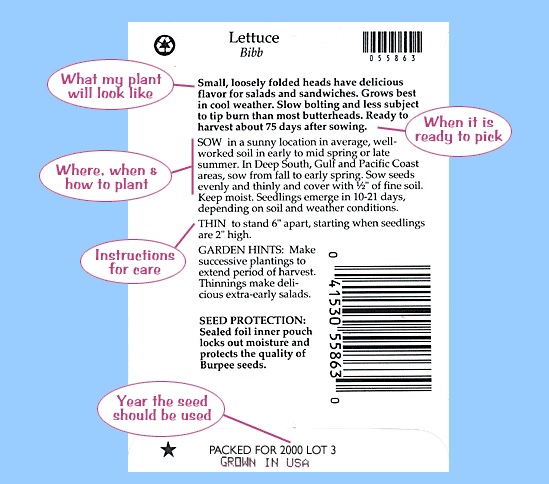
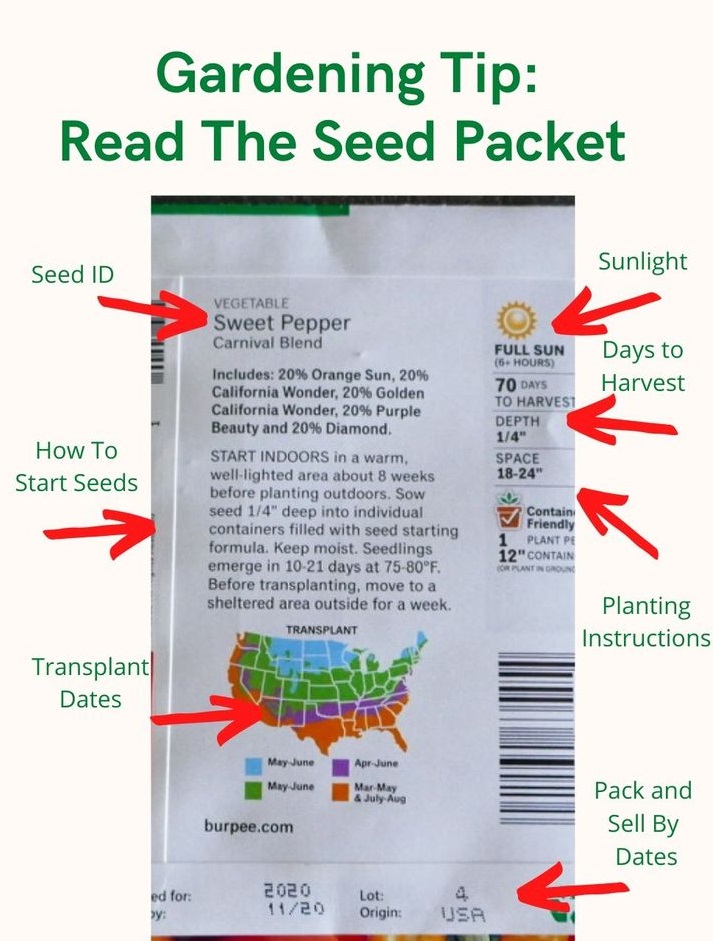
Below are a few examples of seed packets. Not how they are labeled and where all the information is. Happy seed shopping!
 Our Dream Acres Farm